
- By rocco
- Uncategorized
- 0 Comment
Metal Roofs
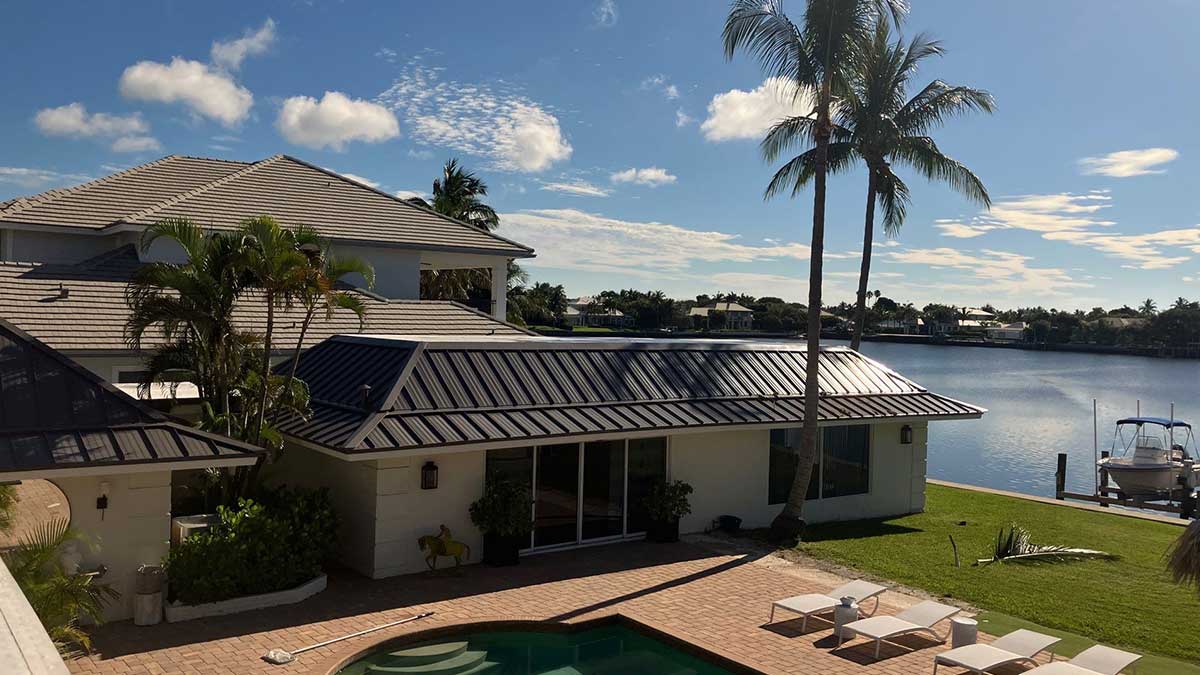
Metal roofs are a high-performance roofing option known for their durability, energy efficiency, and modern appearance. In South Florida, they are a top choice for both residential and commercial properties due to their wind resistance and longevity. This guide covers everything you need to know about metal roofing systems — how they’re made, how they work, and why they’re worth considering.
How Are Metal Roofs Made?
Metal roofing panels are typically manufactured from galvanized steel, aluminum, or Galvalume (a zinc-aluminum alloy-coated steel). These panels are roll-formed into profiles like standing seam or 5V crimp and coated with protective finishes such as Kynar 500 to resist corrosion, fading, and chalking from UV exposure.
How Metal Roofs Work with the Roofing System
Metal roofing is both a protective and a shedding system. The metal panels reflect sunlight and allow water to run off quickly, minimizing heat absorption and water pooling. Beneath the panels, a peel-and-stick underlayment serves as the primary waterproofing layer. Proper ventilation and flashing are critical to maintain airflow and seal vulnerable transition points like ridges and valleys.
Types of Metal Roofs
- Standing Seam: Features concealed fasteners and vertical ribs for a sleek, modern appearance. Excellent for residential and commercial use.
- 5V Crimp: Traditional profile with exposed fasteners. Popular in coastal and rural areas for its affordability and performance.
- Corrugated/Exposed Fastener: Ribbed design, mostly used for agricultural or light commercial buildings.
Advantages of Metal Roofs
- 40–70 year lifespan
- Lightweight yet highly durable
- Rated for high wind uplift — ideal for hurricane zones
- Reflects sunlight to reduce cooling costs
- Resistant to rot, insects, mildew, and fire
- Low maintenance and recyclable
- Available in a wide range of colors and finishes
How Metal Roofs Are Installed
- Remove old roofing and inspect or repair decking as needed.
- Install high-temp, self-adhering underlayment over the full deck.
- Secure edge metal, valley metal, and transition flashings.
- Install starter panels and proceed with fastening metal panels in rows.
- Panels are either mechanically seamed (standing seam) or screwed into place (5V/crimp).
- Ridge caps, end wall trim, and vent flashings are installed and sealed.
- Final inspection ensures all fasteners are secure and penetrations sealed.
Metal Roof Lifespan & Maintenance
Metal roofs can last 40 years or more, with minimal maintenance. Periodic inspections should check for loose fasteners, seam separation, and sealant wear. Unlike other roof types, metal roofs resist algae, rot, and pest intrusion, making them ideal for long-term protection in humid climates.
Is a Metal Roof Right for You?
Metal roofing is a great fit for homeowners who want a durable, modern roof with long-term savings. It’s especially well-suited for coastal areas, hurricane zones, and homes where energy efficiency is a priority. While the upfront investment is higher than shingles, the life cycle cost is often much lower.