
- By rocco
- Uncategorized
- 0 Comment
Concrete & Clay Tile Roofs
Concrete and clay tile roofs are among the most durable and visually appealing roofing
options available. Especially well-suited for South Florida’s hot, humid, and hurricane-prone climate, tile roofs are a long-term investment in both performance and appearance. This guide provides a detailed overview of how tile roofs are made, installed, and maintained, and how they function as a complete system.
How Are Tile Roofs Made?
Concrete tiles are made by mixing cement, sand, and water, which is molded under high pressure and heat to form rigid, durable shapes. They are typically coated with a color or finish that resists fading from UV exposure.
Clay tiles are produced from natural clay and fired at extremely high temperatures in a kiln. This gives them their characteristic density, long-lasting color, and natural resistance to the elements. Clay tiles are often unglazed, giving them a matte, earthy appearance, though glazed options are also available.
How Tile Roofs Work with the Roofing System
Unlike shingles or metal, tile roofs are not designed to be the primary waterproofing
barrier. Instead, they act as a protective outer layer that sheds rain and shields the
underlayment system underneath from UV rays and impact. The real waterproofing
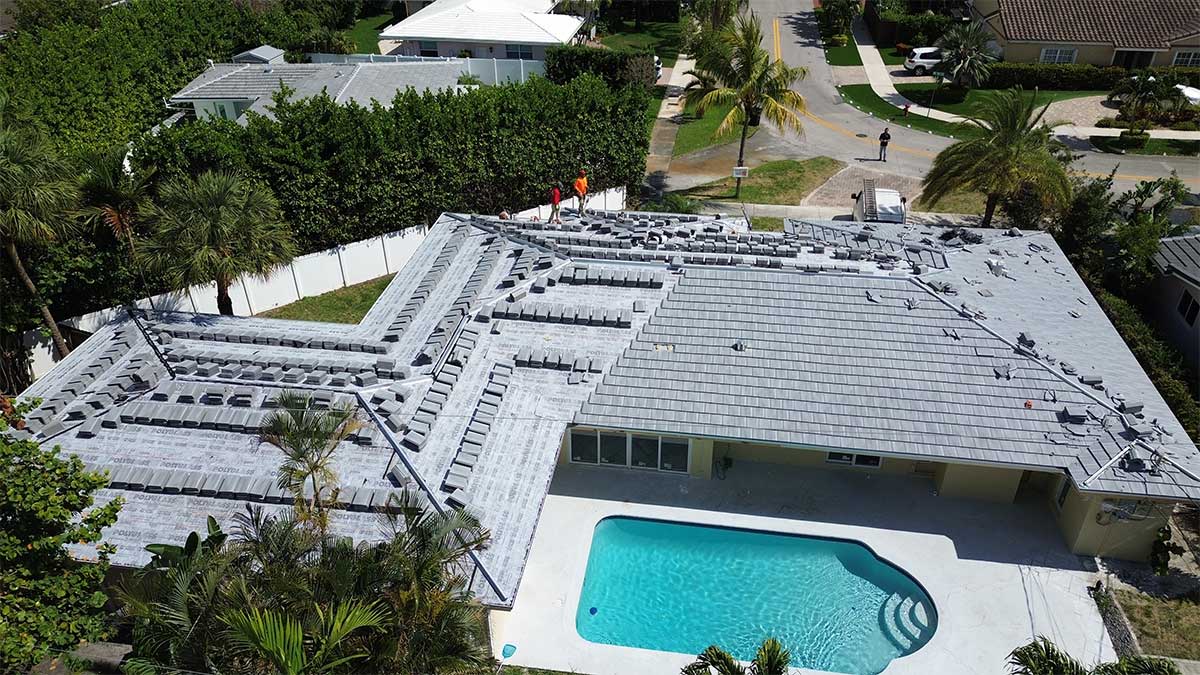
comes from the high-performance underlayment system beneath the tiles. This includes one or more layers of self-adhering membrane or base and cap sheets, which prevent water intrusion even if tiles break or shift during storms.
Types of Tile Roofs
- Concrete Tile: Affordable, available in a wide range of profiles and colors, and extremely durable.
- Clay Tile: Premium look and long lifespan with natural color retention. Lighter than concrete and often used in custom or high-end applications.
- Profiles: Available in “S” shaped, flat, barrel, and Spanish-style forms to suit different architectural designs.
Advantages of Tile Roofs
- Lifespan of 40–75 years when properly maintained
- Exceptional resistance to heat, UV rays, and fire
- Excellent performance in hurricane-prone areas when installed to code
- Timeless curb appeal and natural color retention (especially clay)
- Low maintenance once installed
- Increases home value and energy efficiency through natural ventilation under the tiles
How Tile Roofs Are Installed
- Existing roof covering is removed and decking is inspected and repaired.
- Underlayment is installed — typically a base sheet with a cap sheet or a peel-and-stick membrane system.
- Flashing and edge metal are placed around roof perimeters and roof penetrations.
- Tiles are laid out and secured using approved fastening methods: nailed, screwed, or foam-set depending on slope and code requirements.
- Ridges and hips are finished with trim tiles and closure pieces to prevent water
intrusion and pest entry. - Final inspection ensures compliance with Florida Building Code and manufacturer
specifications.
Tile Roof Lifespan & Maintenance
Tile roofs are among the longest-lasting roofing systems. While the tiles themselves can
last 50+ years, the underlayment may need to be replaced around the 20–30 year mark. Routine inspections should check for broken or displaced tiles, clogged valleys, and debris accumulation. Because the waterproofing is below the tile, even minor tile damage doesn’t always result in leaks — but it should still be addressed to protect the system.
Is a Tile Roof Right for You?
Tile roofs are a great choice for homeowners who value durability, aesthetics, and long-
term investment. They’re ideal for coastal and hurricane-exposed areas, though they may require additional structural support due to their weight. When installed correctly with a quality underlayment system, tile roofs offer unmatched longevity and style.